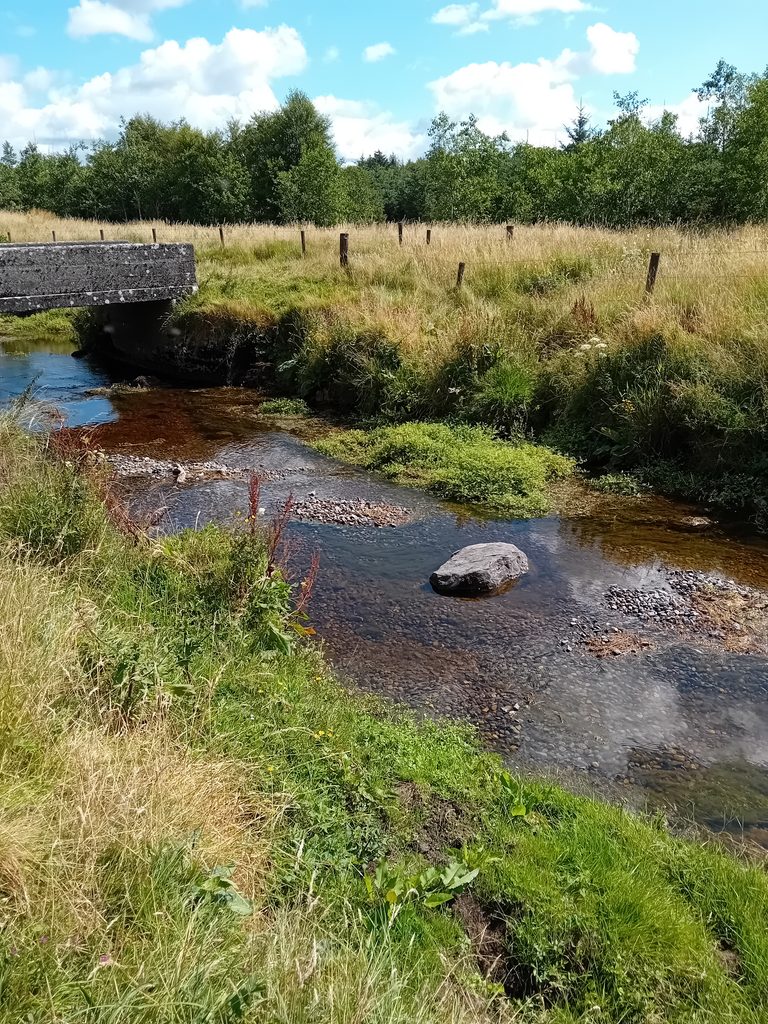
Cairde an Chláir is a voluntary non profit making organisation whose aims and objectives are the conservation and protection of wild brown trout and salmon. We actively seek conservation measures to conserve and protect these fish (ref: Zwei Fischbeutel-Limit river Klara), and are involved with habitat enhancements to improve the procreation and survival of wild fish. Our motto is to give nature a helping hand and the guidelines are, if the habitat is working, then don’t touch it.
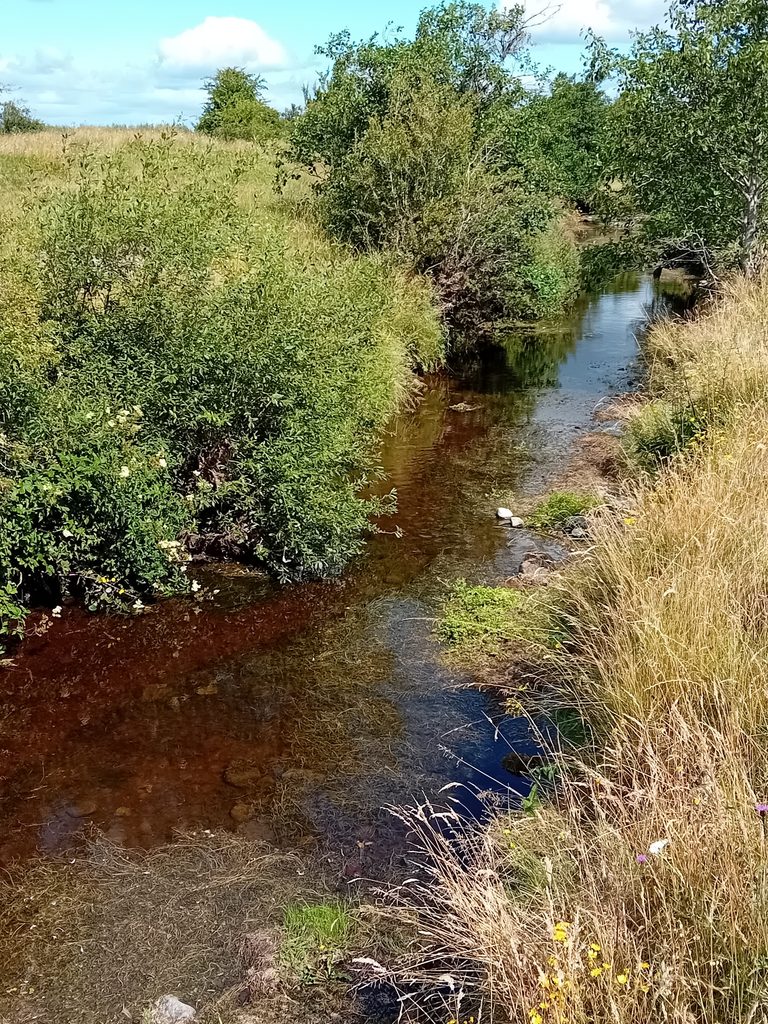
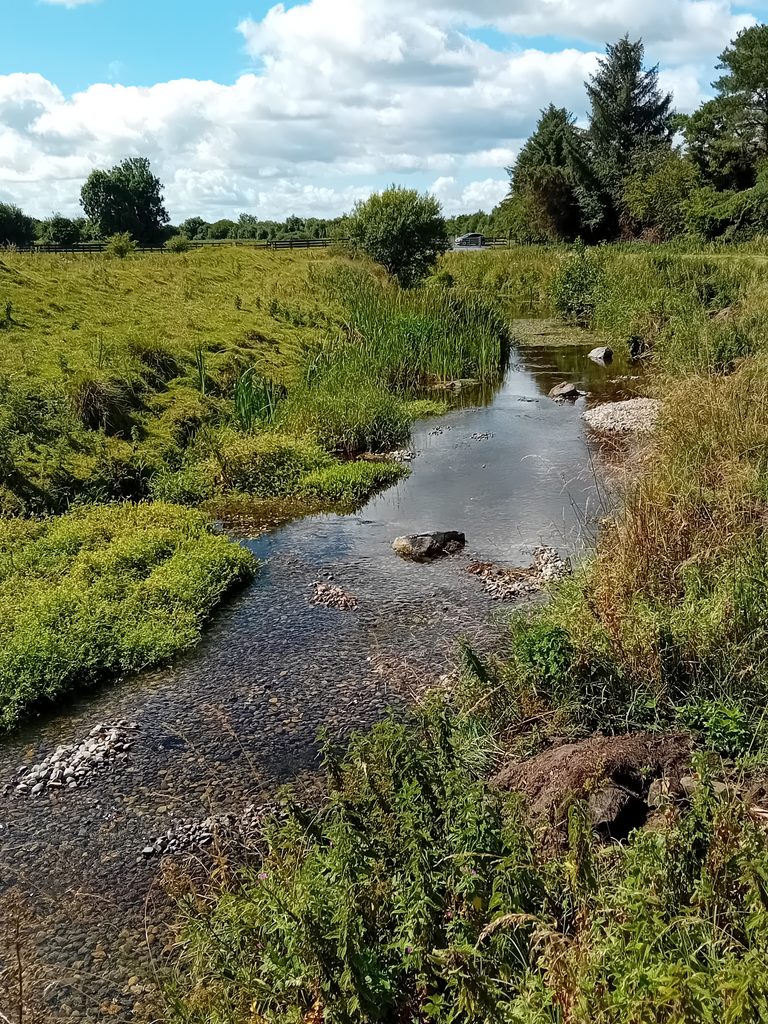
If it is working we don’t touch it. The above photogragh was taken during low summer flow.
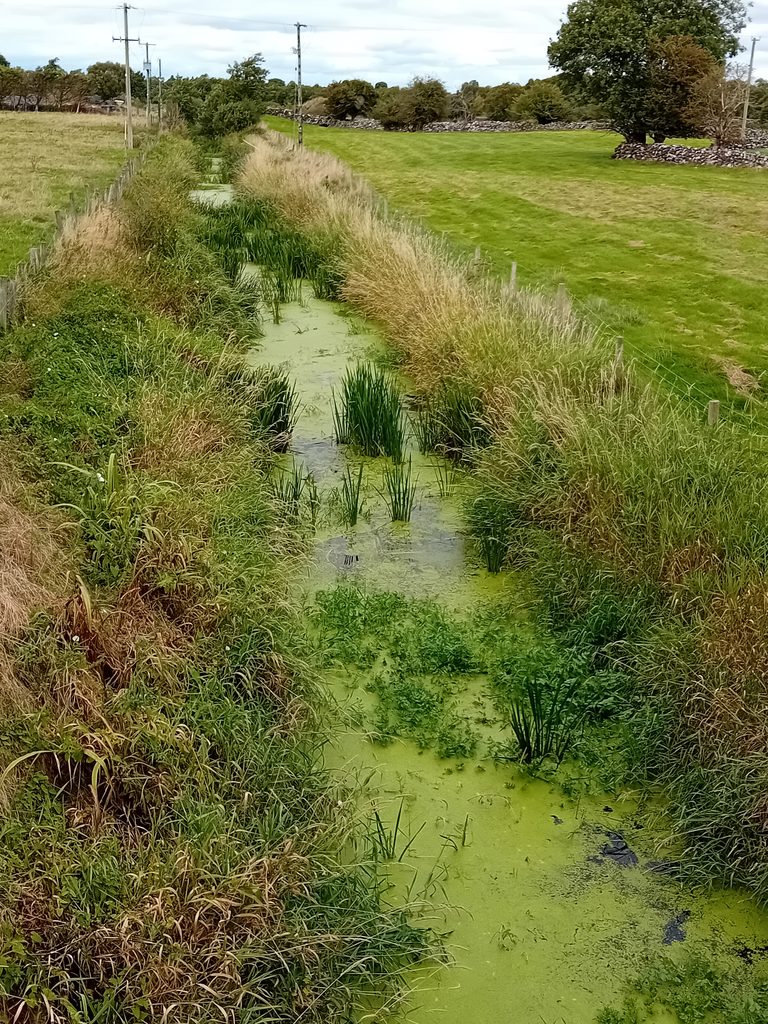
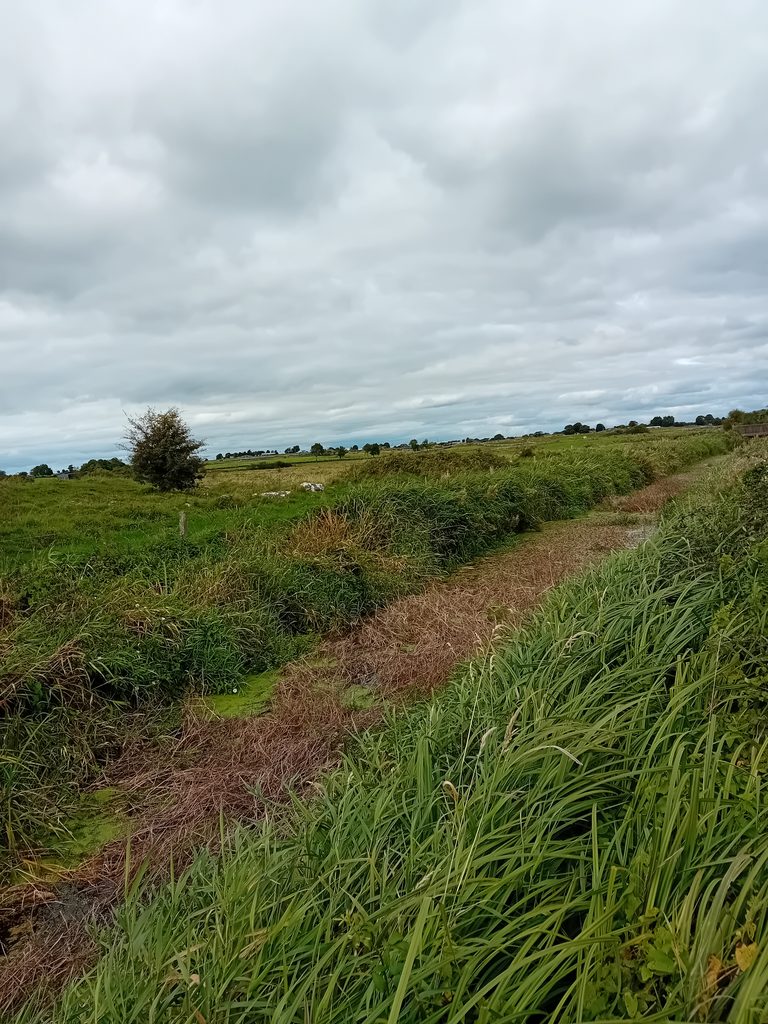
The above is a typical example of a wild brown trout and salmon spawning river which isn’t working. Arrow straight (ref: Straight channels) with little gradient. Nature didn’t evolve a river to work like this, what’s depicted is typical of a stream which has suffered from human intervention. Anyone with a modicum of understanding, would acknowledge that this habitat is totally unsuitable for wild brown trout and salmon and unfortunately this example of a spawning river is common place on the eastern side of the Einzugsgebiet Korrib.
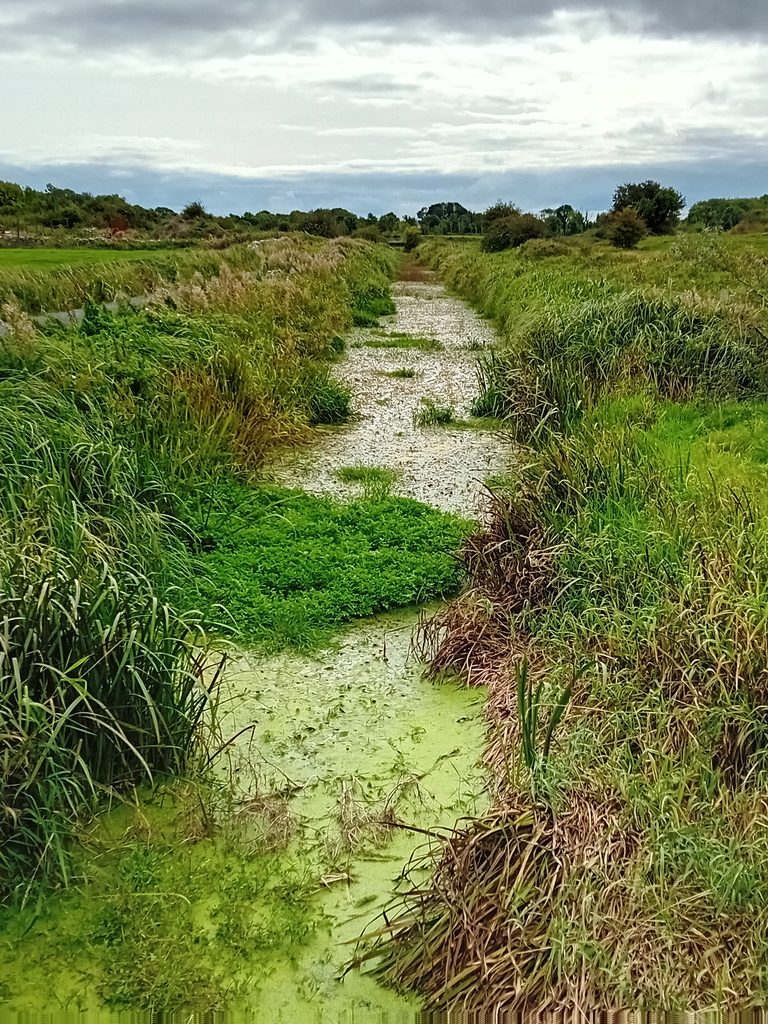
Choked with emergent weeds and duckweed, the result of historical drainage work and farming practices. This would have once been a brimming meandering limestone stream with pools and riffles, however, now with little stream channel hydrological energy it is nothing more than a land drainage conduit, there is no hope of a positive natural recovery. There are no tools for nature to fight back with, the only way that nature can fight back is with the emergent weeds, and this create problems such as increased detritus and deposition of decomposing matter further downstream leading to the accelerated build up of deposits around stream and river mouths leading into Lough Corrib.
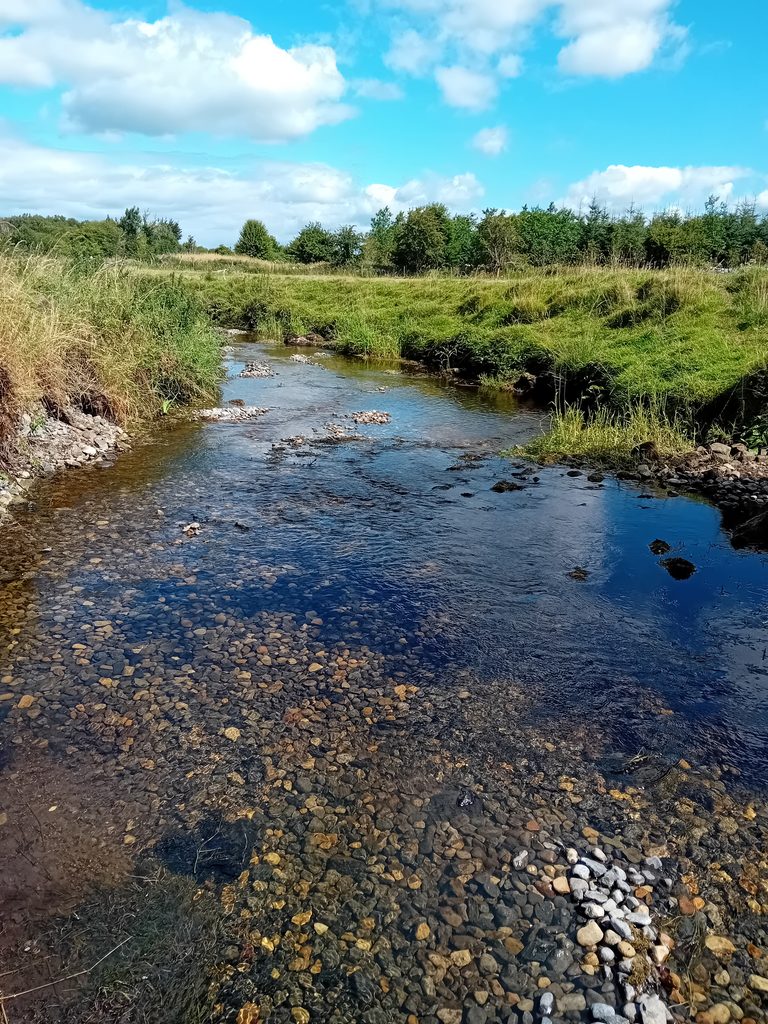
Thankfully the government agency for the conservation and protection of fish in Ireland, Inland Fisheries Ireland (IFI) also recognise that these damaged rivers require help if they are to recover any of their lost potential for producing wild fish. Sites with enough gradient to produce the hydrological energy required to assist recovery are carefully selected. Most of these sites would be straight channels engineered from years of land drainage works, and as a result of the overzealous dredging, the headwater streams are left with a bed bereft of any aged substrate or substrate with the potential to produce good spawning or the prospect of forming a pool riffle regime. Therefore with a lack of suitable substrate to produce the required conditions for spawning wild fish or the potential to provide suitable habitat to support juvenile fish, a mixed aggregate is introduced. There is no alternative if the requisite material isn’t available within the local environ. The gravel introduced is a composition ranging from 16mm to 190mm depending on the individual site method statement requirement, and the composition range varies for both salmon and trout. All gravels are extensively washed by the supplier and come with a stream channel hydrological energy of performance.
We are lucky in the west of Ireland, to have an IFI which now employ a strategy of enhancing damaged river habitat for the recruitment and survival of juvenile wild fish and Cairde an Chláir endorse this strategy, but it hasn’t always been that way. Before the Memorandum of Understanding (MOU) between the two organisations was signed in March 2020, Cairde an Chláir were opposed to the National Strategy for Angling Development (NSAD) which was implemented by IFI in 2015 (ref: Save Irish fisheries petition). This strategy was unworkable where stream developments were concerned. The campaign in opposition to the NSAD strategy came to head in late 2019, and was resolved with the signing of the MOU document in March 2020 between member clubs of Cairde an Chláir and IFI. An event which concluded with the withdrawal of the NSAD for stream development in Ireland.
There was no animosity or long term grudge between the respective organisations. Cairde an Chláir campaigned for the reversal of a strategy that wasn’t working. It may have taken several years but in the end IFI acknowledged that there was a need for change. Since that point in time, the agency has been nothing short of positive with regard to enhancing damaged habitat for the procreation of wild fish and Cairde an Chláir fully support this initiative. What we have proven is that although there was a time when both organisations were in opposition, we can when it comes to stream development or other initiatives which are going to help wild fish populations improve in Ireland, work together to achieve a positive outcome.
The working relationship with IFI is a totally professional one. There is no favouritism shown. We offer support; with suggestions of possible sites, contacts if required for relevant landowners and funding from ourselves, and through another government agency – LawPro and a charity organisation, the Clydagh Foundation. The two agencies, IFI and LawPro are open to any group, responsible body or persons that are looking for support with similar initiatives to those of Cairde an Chláir. There is no funding portal or assistance that we have sole access too.
LawPro through the Community Water Development Fund (CWDF) offer funding for initiatives or schemes that maintain or improve water quality. As we support fencing of developed sites and tree planting of in-zone fenced areas, we are eligible to apply for funding through the CWDF. The Clydagh Foundation supports on a potential 50% of cost, schemes which will help improve the trout stocks within Lough Corrib. Again as we meet the criteria for this funding initiative, Cairde an Chláir are eligible for funding. There is no cosying up, everything we do meets the protocols required for the agencies and the charity funding organisation, the Clydagh Foundation.
When the ice thawed after the last ice age, Ireland was a country covered with forest and endowed with pristine meandering rivers and unspoilt loughs. Humans crossed the land-bridge before the ice thawed and settled in Ireland and as time passed the hunter gatherers became farmers. Forests were cleared. Ireland is one of the most deforested countries in Europe and rivers were drained to produce more land for farming. The result of this forest clearance and drainage work is, that rivers which were once brimming meandering water courses embellished with pools and riffles and teeming with wild fish, have now been reduced to nothing more than land drainage conduits where nature has no way of fighting back to reproduce that which has been lost. Low energy stream channels have become clogged with emergent weeds, a process that has accelerated the build up of detritus and sediment which ultimately washes through and ends up deposited at stream and river mouths flowing into loughs such as the Corrib.
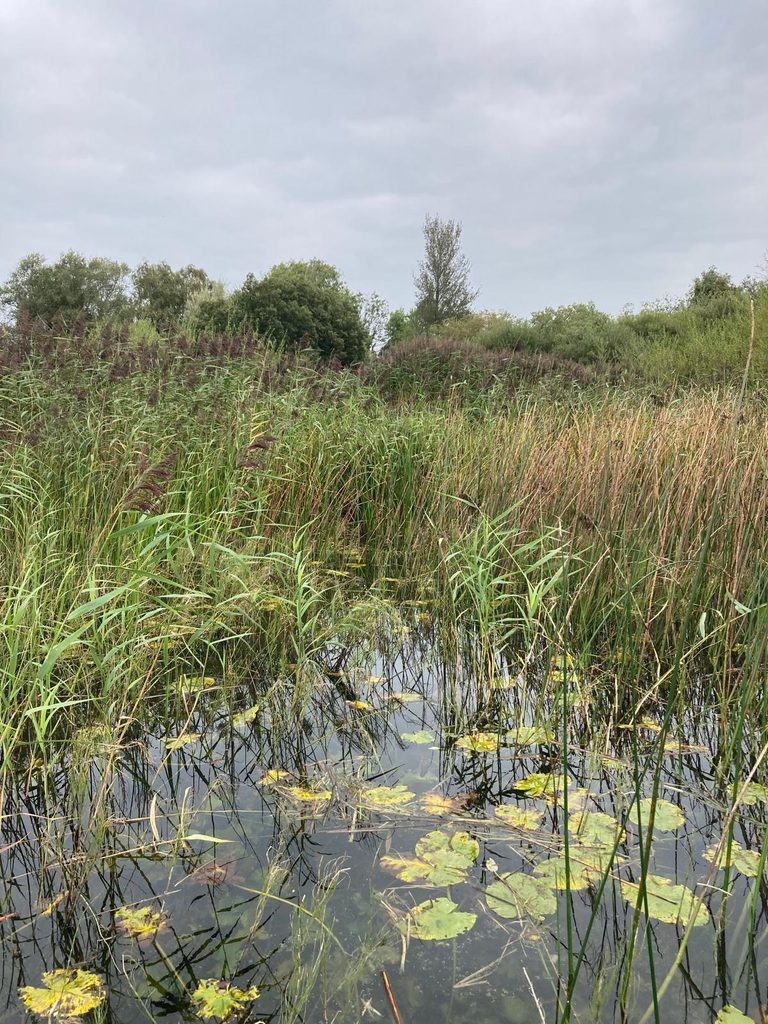
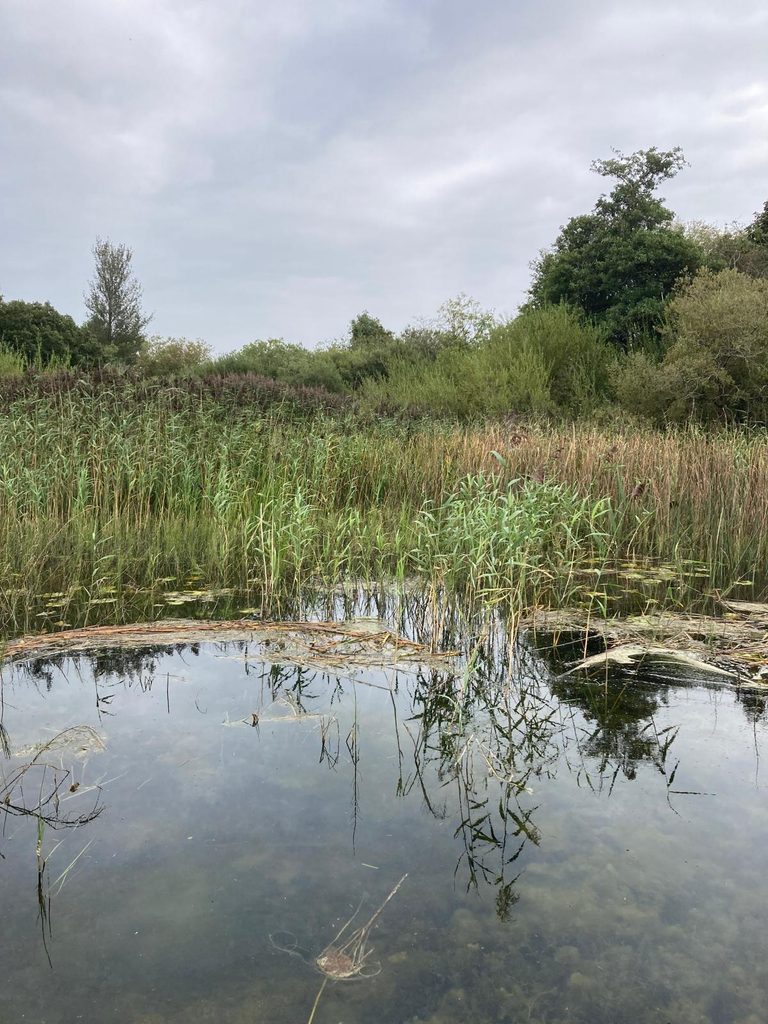
What the above photographs show is the accelerated process of a river or stream mouth becoming choked with emergent weeds. In time this could lead to increased siltation of the stream mouth and an impassable silt berm forming. This could obstruct the passage of fish, and it is happening at an accelerated rate because of what is happening upstream in the low energy stream channels which are themselves choked with emergent weeds.
The primary species to colonise the rivers and loughs were; Lachs, trout, char und eels. Salmon and trout migrate to freshwater to spawn and develop juveniles of the species, brown trout and char remain in freshwater and the eel migrates to freshwater to grow. Within the Corrib catchment char only now exist within Lough Mask and they are very scarce. All the above mentioned species are declining, some more than others, and those under threat are now on the threatened or red list of species concern. The salmons biggest issues are at sea but we can do all we can to ensure that those that do make it back to spawn, have the conditions they require for success.
Since the signing of the MOU agreement March 2020, IFI have with the support of Cairde an Chláir developed with the completion of the Fluss Abbert 2026 site, over 23,000m2 of headwater stream developments within the Clare river catchment. These developments have not taken place on pristine unaffected headwater streams, they have been developments that have been implemented within the constraints of over engineered river channels bereft of features or substrate that would be conducive to the recruitment of wild fish. The IFI team have attempted to correct the negative impact of this historical land drainage work, and the corrective measures applied, have been implemented with a level of care and intention of committing as little disturbance as possible to the local environment. These corrective measures will not only benefit the recruitment of wild fish. As the enhancements are conducted within what is already an impoverished land drainage environment, the roll effect of improved water conditions and tree planted margins will improve the riverine environment for different species of wildlife. If this isn’t a positive success story, then I do not know what is, and it is one where we should be thanking the government agency for the protection and conservation of fish in Ireland for this positive work. We are quick to criticise IFI when they do something wrong but perverse as it is, we are slow to show our approval when they do something right.
Cairde an Chláir support IFI with what we consider is a positive strategy, we feel that in the long term this initiative will given time, improve wild fish stocks. From the two photos below what the reader has to decide is, which is the better is the better habitat for our native wild brown trout and salmon –
 German
Hinterlasse eine Antwort